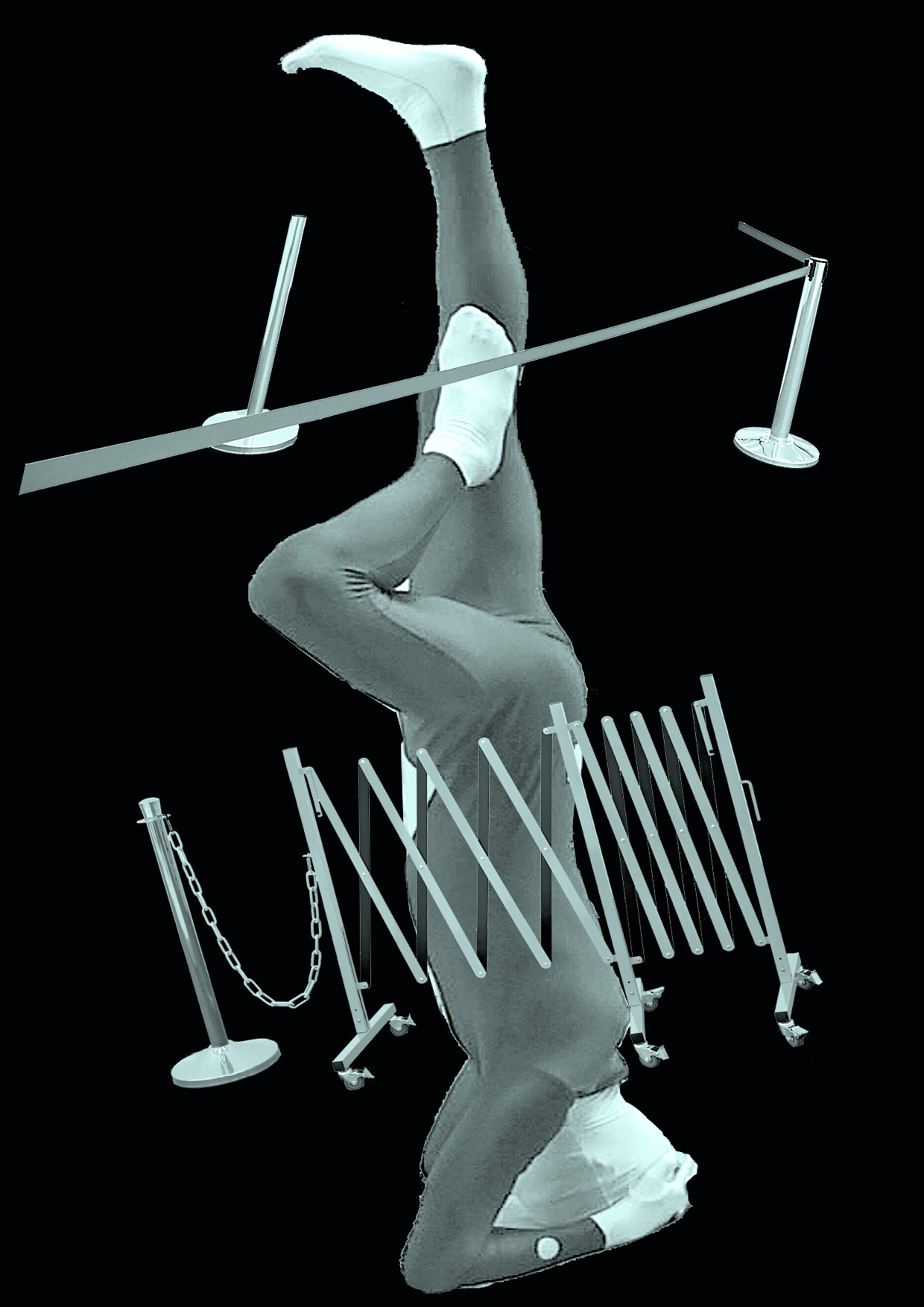
A GALLERINA'S DREAM (ARBEITSTITEL)
STEFAN PANHANS & ANDREA WINKLER
17 Mar–30 Apr 17
OPENING: March 16, 2017, 7 pm
“(…) there are labels, barriers, vests, and people wearing them. So, the people are actually also part of the infrastructure. At some point, you wonder at what moment you yourself become part of that infrastructure: Is it as soon as you check in and pull your boarding pass from the machine? While standing in line? Or only when you place your suitcase on the conveyor belt? Either way, you are part of a mechanical process. And it is actually mere coincidence that you aren’t currently inside the suitcase—or the suitcase itself—of your own accord.” — Jan Verwoert, in conversation with Andrea Winkler
“A GALLERINA’S DREAM (WORKING TITLE)” with Stefan Panhans and Andrea Winkler provides impulses regarding contemporary structures of work, art, and exhibition production.
The gallery as a workplace—whether commercial or nonprofit—is representative and public. We act upon a stage; we are hosts, showmasters, and directors. Space, time, and financial resources influence the acts of inviting and showing, as well as attention, exclusion, and control.
At the beginning of the reflections on this exhibition, the following questions were posed: How do we want to work and represent work? Who gets in, and who stays out? During the process, the focus shifted increasingly toward the central image of the exhibition space as a stage and the idea of the theatrical, which bundles various thoughts on the labor and infrastructure of an exhibition space.
Stefan Panhans creates social spaces in his films that reflect a communication culture of self-representation. His protagonists appear as a unity of human, image, and avatar within hyper-medial environments; they are overwhelmed consumers and “lone warriors” navigating gyms, ICE train compartments, and casting shows.
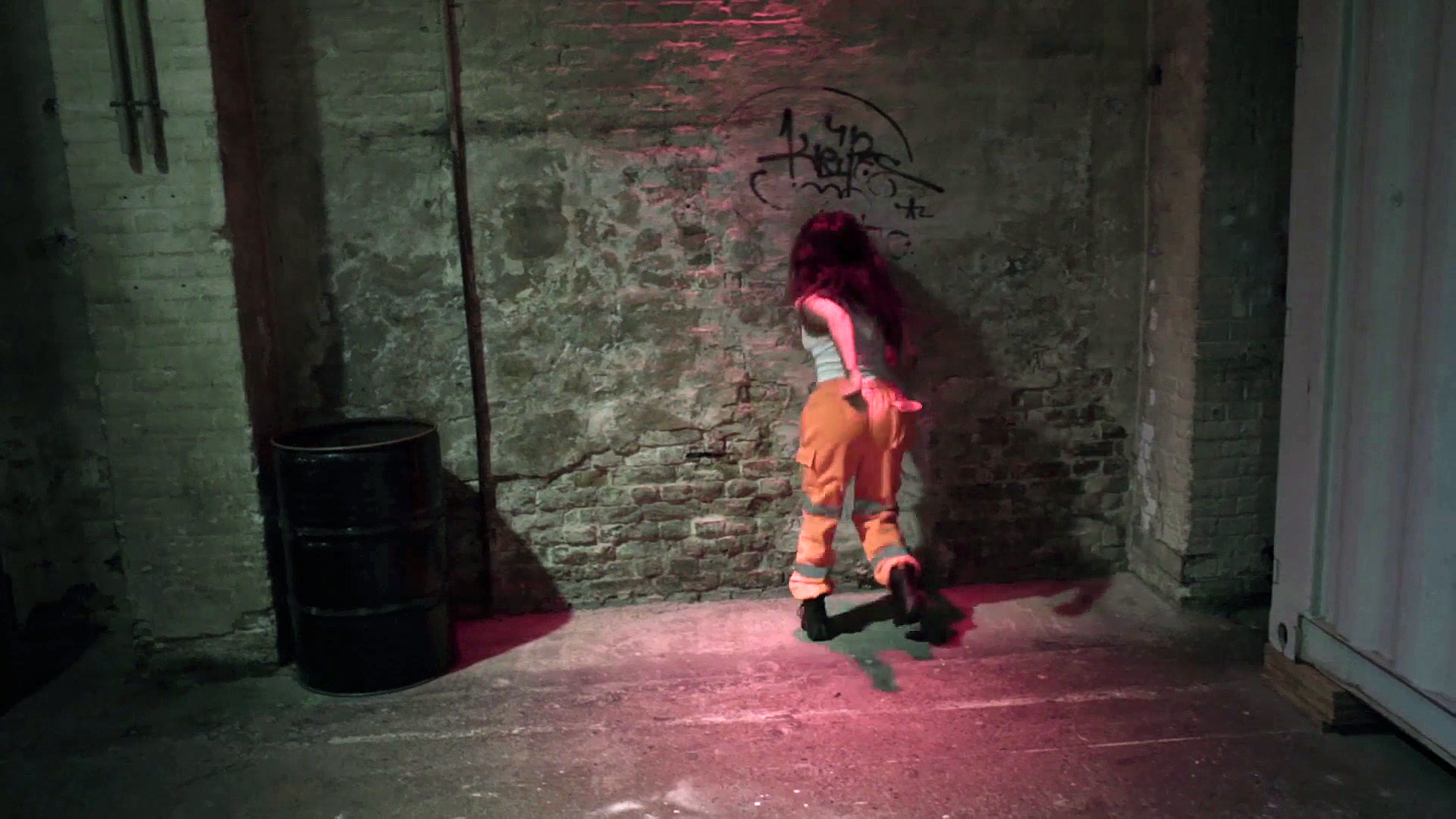
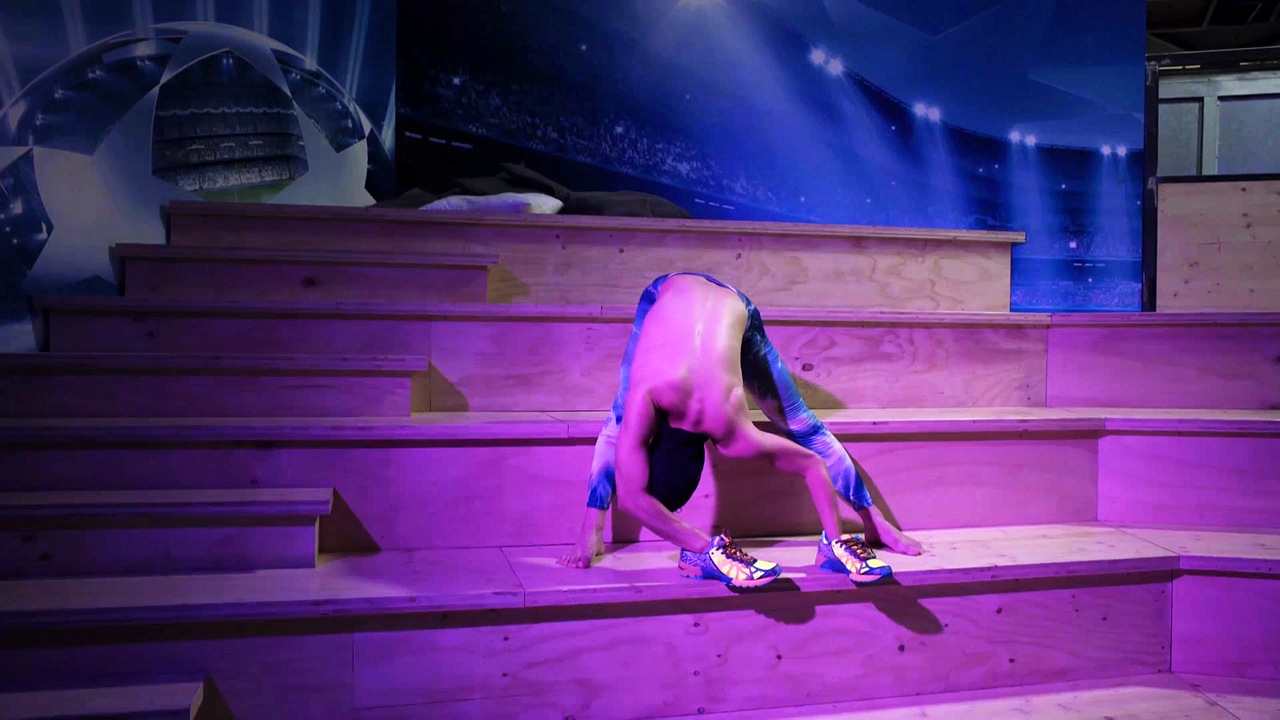
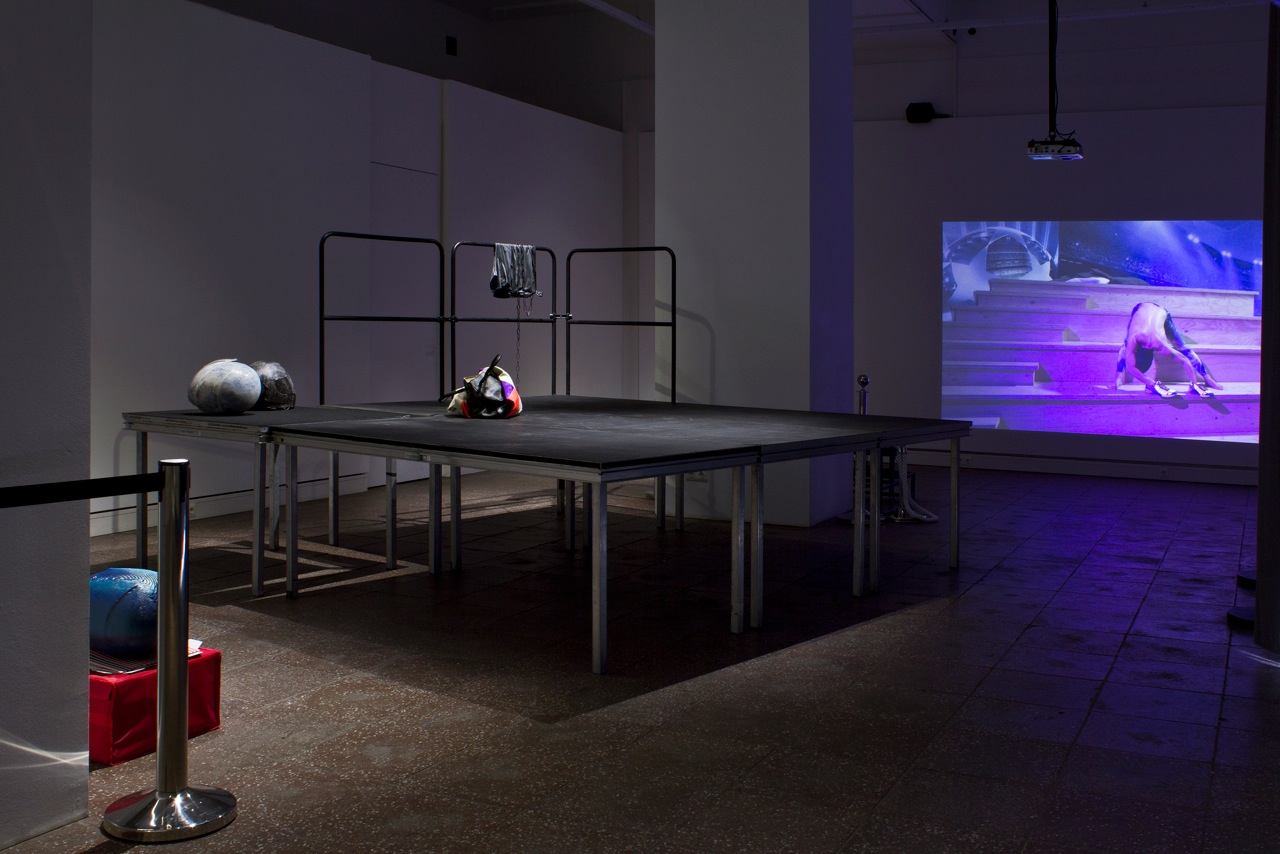
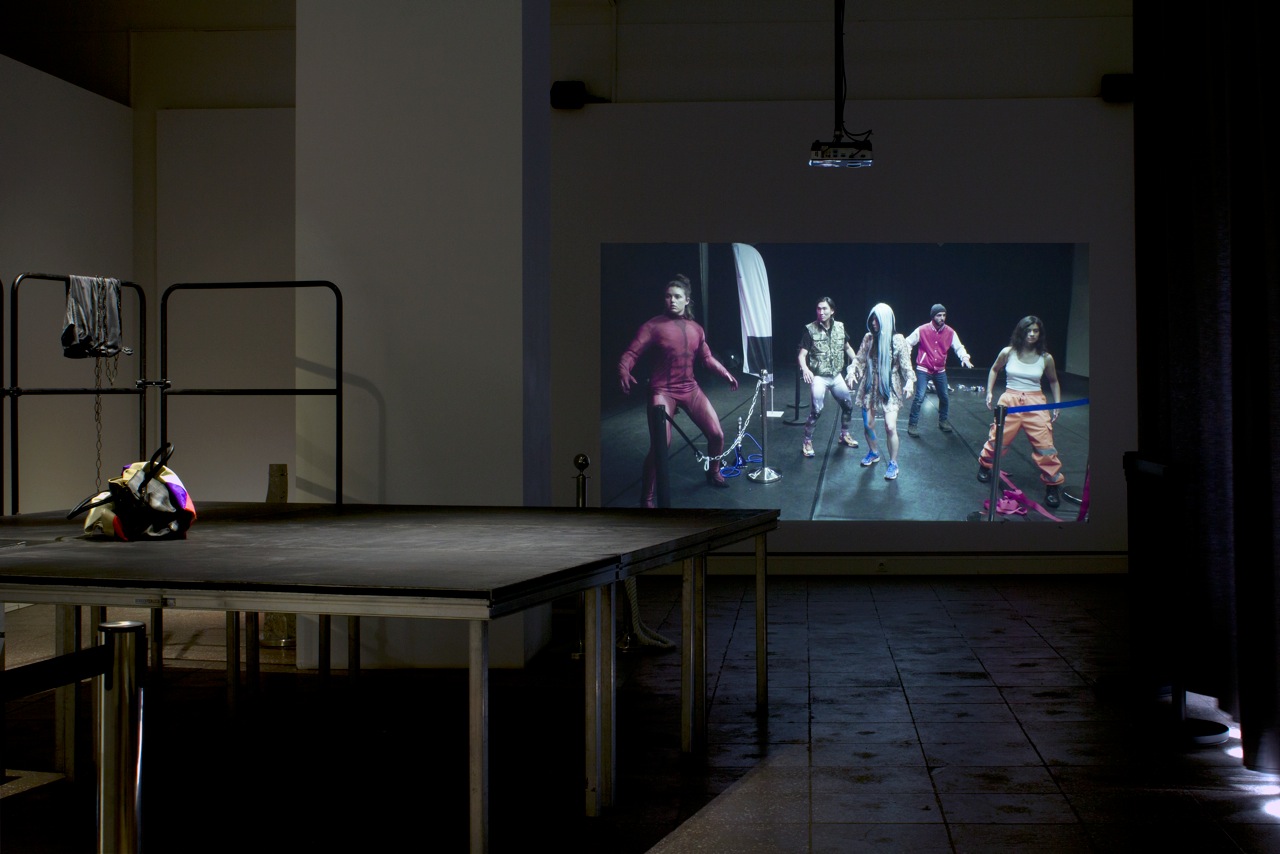
His latest video, “Freeroam À Rebours, Mod#I.1” (2016), is being shown in Berlin for the first time as part of this exhibition: the 16-minute film oscillates between music video and dance performance, transferring the faulty movement patterns of humanoid game avatars onto the human body. Various scenarios of digital “insufficiency,” defects in the avatars’ algorithms, and player errors lead to a refusal of meaningful, functional movement. Within the film’s hypnotic rhythm, these errors become choreographic motifs that resist the logic of omnipresent optimization.
Andrea Winkler works with objects of acceleration and remnants of transit that have been put through the “centrifuge” of digital reality. In precisely measured gestures, she creates stage sets that evoke a world of commodity fetishism. Together with Stefan Panhans, she has designed a theatrical scenario for the exhibition that perhaps blocks the view rather than enabling it. What emerges is a boxing ring, a platform, a void, a stage, an event space, a concept store, a display.
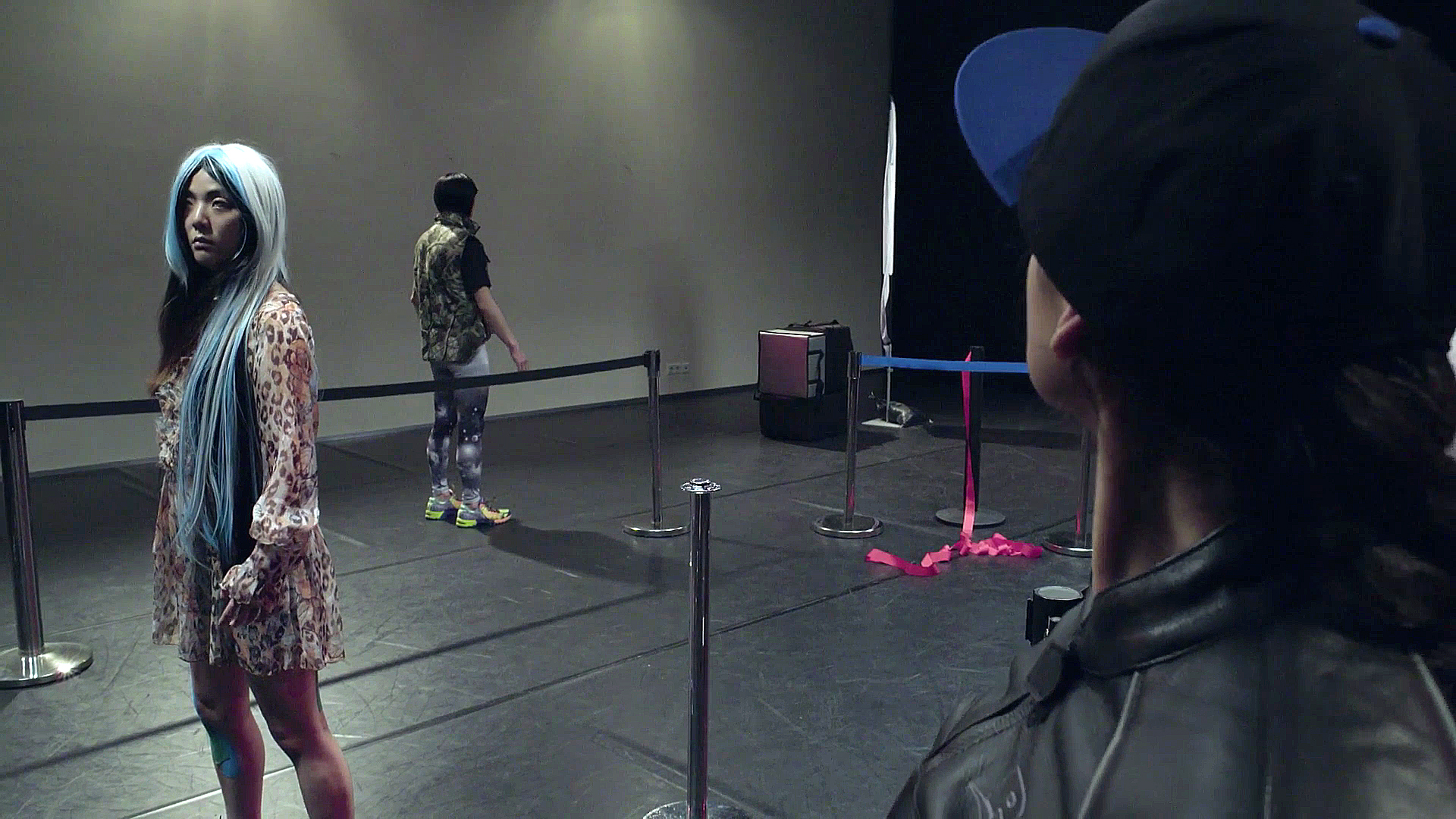
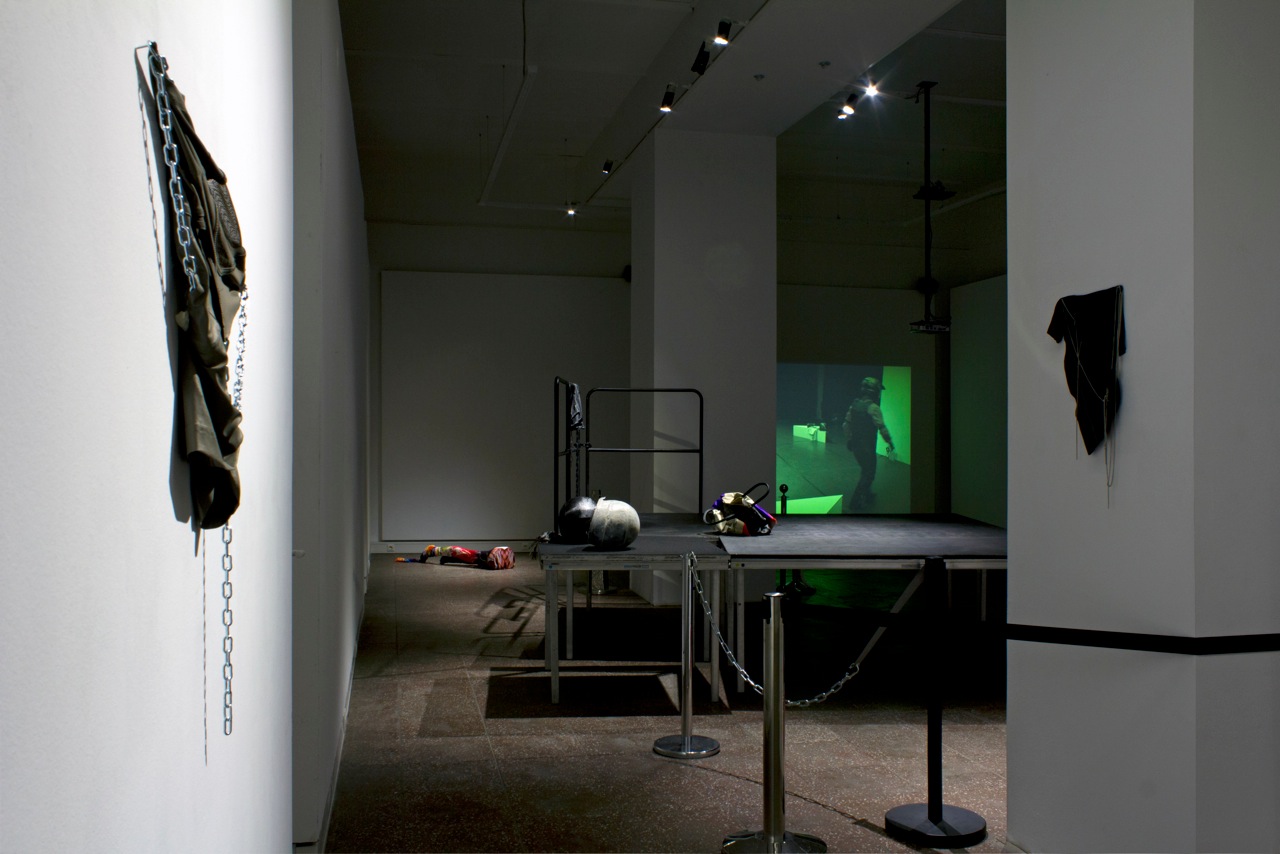
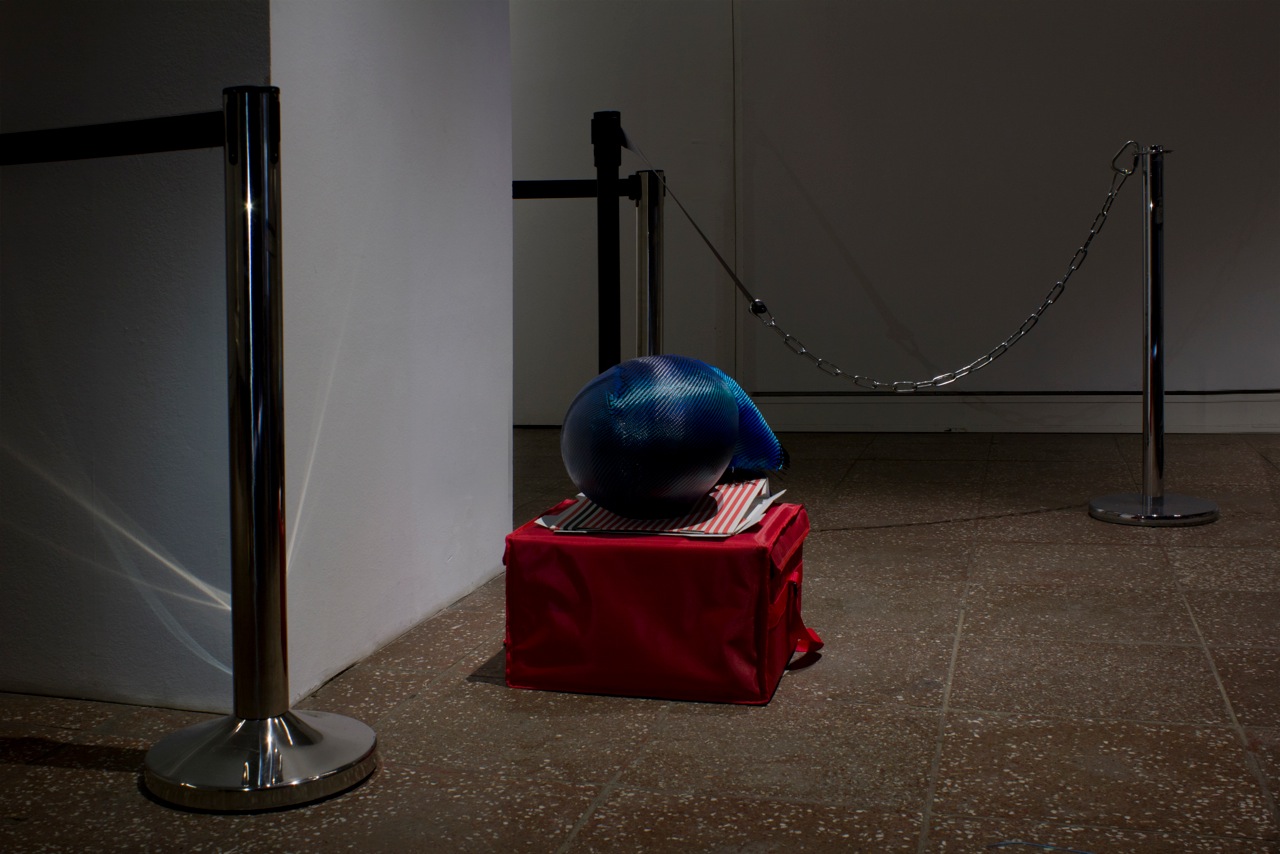
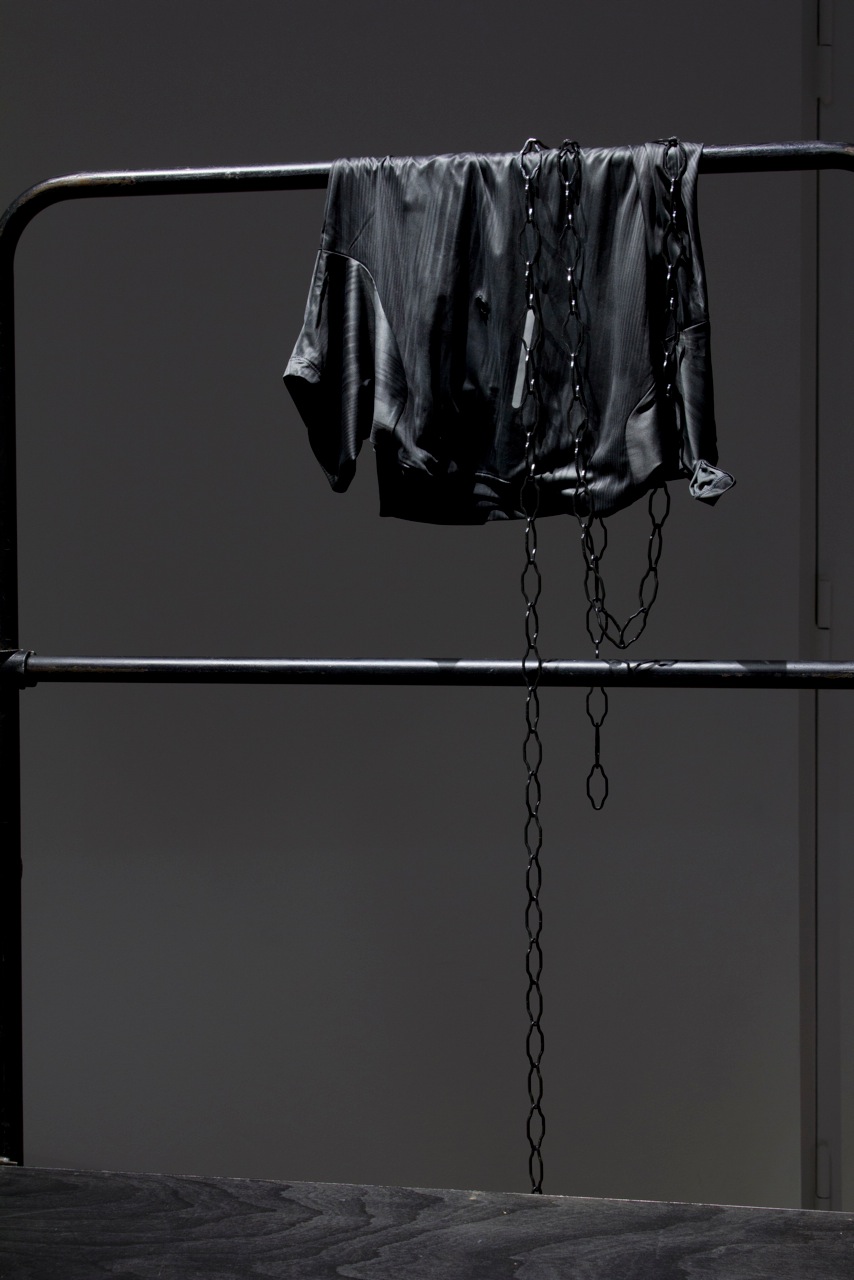
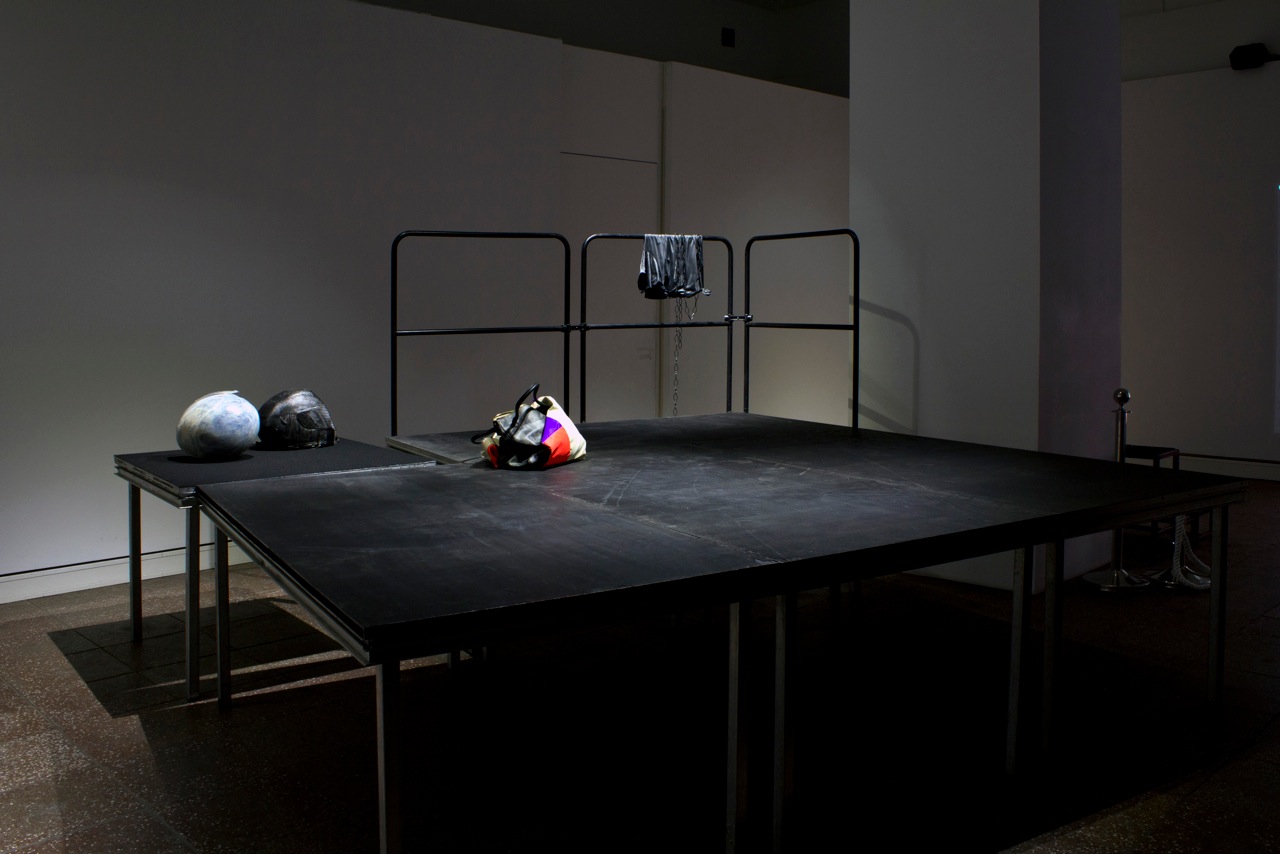
The jointly developed spatial concept includes a central stage as well as elements from barrier and pedestrian guidance systems. Within this, Andrea Winkler presents rhythmically choreographed objects from the series “Ghosts” (2017) and “BAGS” (2013)—appropriated and modified fitness shirts and bags—as well as motorcycle helmets encased in silicone and carbon fiber. These act as performers on the stage and as hybrids between image and sculpture, shell and body, existing in one or more realities.
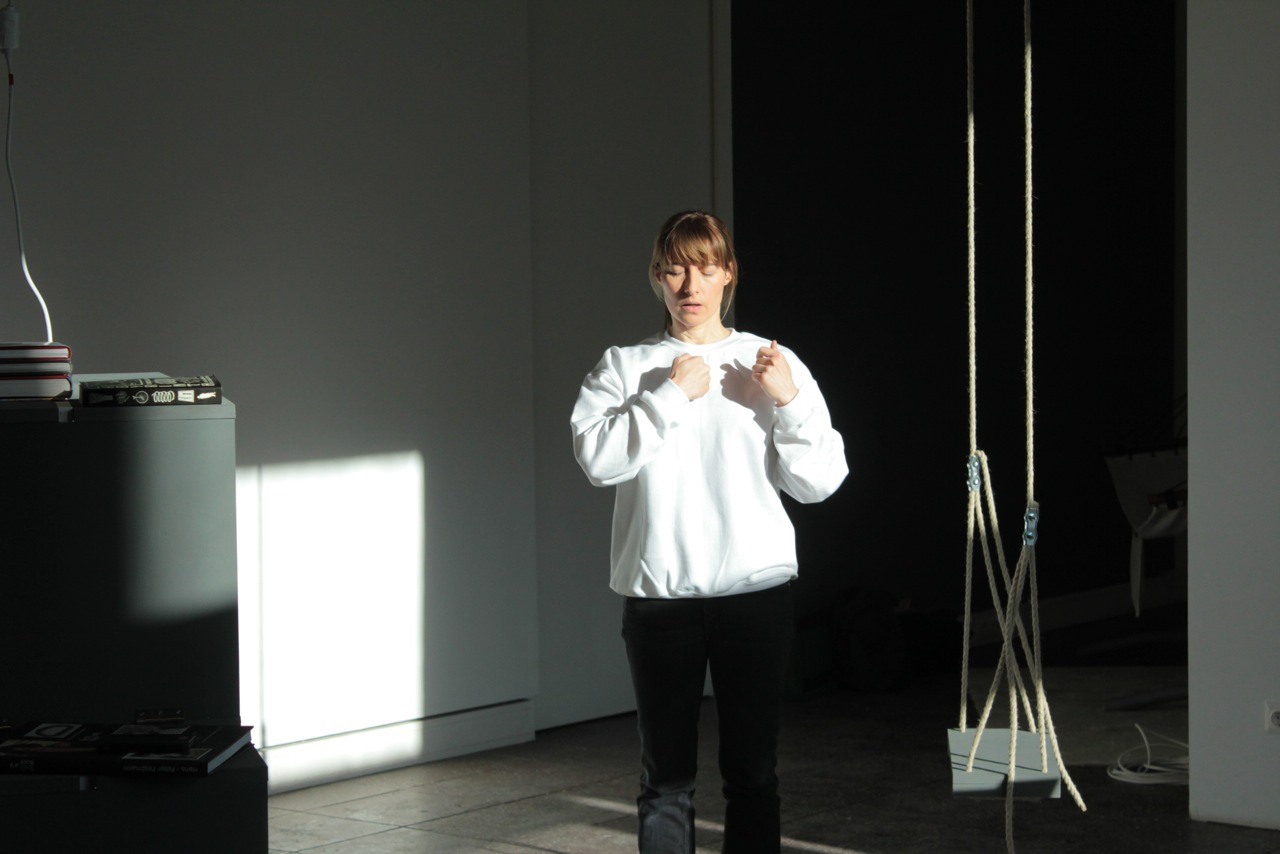
As soon as visitors enter the room, a situation arises in which they themselves become actors within the stage set of this fragmented infrastructure. The stage space and the spectator space merge into one; observation becomes performance. Scenes from the film and the spatial installation blend; virtual and physical spaces are connected.
Does the spatial installation understand itself as a memory, a dream, or a fragmented reenactment of an exhibition in the future? Like airports, the infrastructure and display architecture of an exhibition space adopt a rhetoric that conveys security, yet cannot consistently fulfill this promise.
The motorcycle helmets—intended to envelop and isolate the human head, here wrapped by Andrea Winkler in ultra-light fabric—possibly represent the longing for security and the increasing pace of the “creative imperative” of our work; at the same time, they are perfect forms executed in ever-new variations. Similarly, ideas in an exhibition space are constantly varied and re-cited.
Digital avatars seem to fulfill our inherent longing for perfection, yet in reality, every digital algorithm is fallible. Just as this fallibility becomes visible through dance in the film, an exhibition space can also be a room for errors, blockages, and frustration. For fragments, bits, particles, ghosts, leftovers, scraps, and ruins.
Quote see: »Haltlos hergestellt«, conversation between Jan Verwoert and Andrea Winkler, in: »Andrea Winkler«, (Ed. Kathrin Busch), Snoeck Verlag 2017.
Event:
Book Release and Speed Reading Contest, Stefan Panhans “We Just Left Shore”, (Novel, Textem), April 25, 2017, 7:00 PM.
Team
Curated by Celina Basra
With the kind support of the Senate Chancellery for Cultural Affairs, the Municipal Galleries Exhibition Fund, and the Exhibition Remuneration Fund for Visual Artists.