Uglier, Louder, Taller, Weirder – Hearing the Weeds grow
Crystal Z Campbell, Ellinor Aurora Aasgaard & Zayne Armstrong, John Smith, Laura Nitsch, Marta Popivoda
11 Feb–15 Mar 26
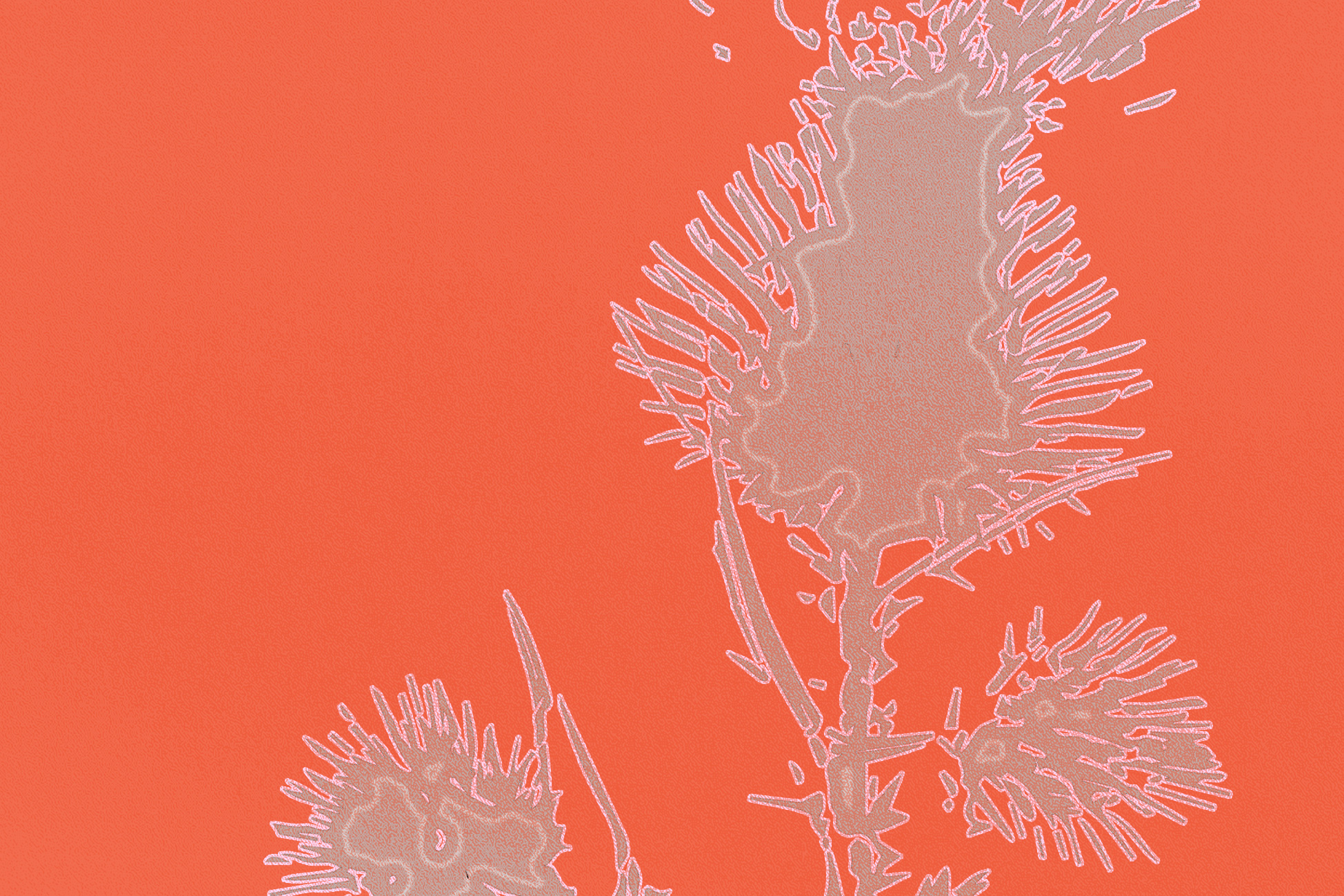
Uglier, Louder, Taller, Weirder – Hearing the Weeds grow / Das Unkraut wachsen hören is the second exhibition of the project Louder, Taller, Uglier, Weirder – Learning from Weeds, which runs for almost a year, brings weeds out of the shadows of the thicket and places them at the center of a new narrative. Here, weeds appear not only as objects of study, as medium or metaphor, but rather as an active principle or a self-possessed adjective and verb. We ask: when is something, an action, or a state, ‘weedy’? What does it mean to actively ‘weed’ in art, in institutions, in language, and in everyday life?
Screening programme with video works by Crystal Z Campbell, Ellinor Aurora Aasgaard & Zayne Armstrong, John Smith, Laura Nitsch, Marta Popivoda
with a shadow intervention by Anaïs Senli & Eduardo da Conceição
Week 1
11.2.-15.2.2026
Marta Popivoda
Landscapes of Resistance
HD Video, 95 min., Serbo-Croatian with english subtitles, 2021
Landscapes of Resistance traces a journey through the memories of antifascist fighter Sonja (97), one of the first Partisan women in Yugoslavia, who was also among the leaders of the Resistance movement at Auschwitz. The film makes her story travel through time toward the bodies of a new generation of antifascists, suggesting that it is always possible to think and practice resistance.
How can a landscape speak?
It’s like wondering wether the grass, the crickets,
or the pond are only a backdrop of events,
or wether they are participants of events,
with their shadows, depths, sounds,
waiting to become narrators?
Marta Popivoda is a filmmaker, artist, and researcher. The main concerns in her work are the tensions between memory, history, and ideology, and the relations between collective and individual bodies, approached from a feminist and queer perspective. She uses landscape dramaturgy, feminist storytelling, and principles of radical slowness to produce scenes of antifascist and eco-feminist memory.
Week 2
16.2.-22.2.2026
Crystal Z Campbell
Makahiya
Digital Video, 10:23 min., English with German subtitles, 2024
Makahiya, a Tagalog word that translates to “shame” or “shyness,” is a short experimental film recorded in the Philippines –– Crystal Z Campbell’s mother’s ancestral homeland. The film travels via a sentient plant (mimosa pudica) found across tropical landscapes, entangling touch and sentience with colonial history, landscape, and archival memory in the aftermath of catastrophe and US militarization.
Crystal Z Campbell is an artist, filmmaker, and writer who uses time as material. Campbell’s works explore the underloved –– persons, places, and things worthy of more attention. Using archival, historical, and personal memory as muse, their work may manifest in embodied forms, tactile works, and works that exist beyond touch.
Week 3
23.2.-1.3.2026
Ellinor Aurora Aasgaard & Zayne Armstrong
Los Tres Puntos
SD Video, 45 Min., English, German, Spanish, 2025
Marlie, working the front desk of a Berlin hostel, hosts a rising astrology podcast called Astrosapiate. After dreaming of a threatening T-Rex, she becomes convinced a Capricorn will soon transform her life and her listener count. When an unstable caller named Celeb phones in, she exploits the drama for entertainment, only to realize she may have misread her dream entirely. A former guest she once misadvised returns to sue her and introduces a new form of neurodivergence: the ability to hear text-message “three dots” as they are being typed. The satirical melodrama explores how financial precarity pushes people into ethical gray areas, especially when confronted with forces that can literally read between the lines.
Ellinor Aurora Aasgaard & Zayne Armstrong formed their collaborative practice around making a serial ‘soap opera’ video project, called “Days”, which engages numerous other artists in its satirization of neoliberalism. The romantic tropes of the soap opera genre are adapted into docudrama-like stories about emotional, unpaid and abstract labour.
Week 4
2.3.-8.3.2026
John Smith
Being John Smith
HD Video, 27 Min., English with english subtitles, 2024
The film starts on every hour and half hour
In Being John Smith the artist reflects on the burden and irony of having one of the most generic names in the English language. Using his trademark wit, Smith traces the origins of his name and how his feelings toward it have evolved. The film blends personal photos, found images, and internet-sourced material to weave together the intimate and the impersonal. Although autobiographical, Smith emphasizes that the work is not self-centered but broadly relatable. Through his reflections on family, self-doubt, and the state of the world, the film ultimately offers a portrait of the anxieties shared by ordinary people.
John Smith studied at North-East London Polytechnic and the Royal College of Art, after which he became an active member of the London Filmmakers’ Co-op. Inspired in his formative years by conceptual art and structural film, he also became fascinated by the immersive power of narrative and the spoken word, forming the foundation for the diverse body of work that he has developed over the past five decades.
Week 5
9.3.-15.3.2026
Laura Nitsch
Violett
4K Video, 29 Min., English / German with english subtitles, 2022/2023
Violett explores the historical connections between poverty and queerness in public spaces. Starting with the physical practice of cruising, the film moves through different times, materials and archival gaps, following forms of desire that informally, resistively and often invisibly appropriate space. Historical court records from socialist Red Vienna at the beginning of the 20th century serve as the starting point for the work. They refer to the repression and stigmatisation of queer/lesbian workers, but also to the rebelliousness and resistance of queer and proletarian realities of life. By combining archival fragments, animation, sound and performance, Violett creates a hybrid counter-narrative in which observation, memory and speculative gestures overlap.
Laura Nitsch follows traces of the disobedient, the stubborn and the unexpectedly witty in queer desire and working-class experience. Drawn to stories that refuse to disappear, she works with film, writing and scraps of memory. Her practice moves between observation and speculation, tracing how resistance takes form and how other kinds of economies and relations might emerge.
Accompanying programme
-
Film Screening: Between Memory and Hope - The Sign Language of Kafr Qasim
Meyad Sarsour-Ndaye, Dirar Kalash & Robert Yerachmiel Sniderman
14 Feb 26 , 5.00–7.00 pm
-
Berlin-Premiere: Los Tres Puntos
Ellinor Aurora Aasgaard & Zayne Armstrong
23 Feb 26 , 7.00–9.00 pm
Louder, Uglier, Taller, Weirder - Learning from Weeds / Von Unkraut lernen
“Many say that weeds are invasive. Their invasion is about being present and wanting to exist. These accusations usually come from those who want all the space for themselves.”
“Weeds embody life’s contradictions, thriving where unwanted, representing challenges to be embraced rather than eradicated.”
“What and whom we perceive as weeds or weedy is always dependent on time and space. This says more about ‘us’ than about the weeds themselves.”.
“What opts out of usefulness undermines the economies that try to bind life’s value to productivity.”
Uglier, Louder, Taller, Weirder – Hearing the Weeds grow / Das Unkraut wachsen hören is the second exhibition of the project Louder, Taller, Uglier, Weirder – Learning from Weeds / Von Unkraut lernen, which runs for almost a year, brings weeds out of the shadows of the thicket and places them at the center of a new narrative. Here, weeds appear not only as objects of study, as medium or metaphor, but rather as an active principle or a self-possessed adjective and verb. We ask: when is something, an action, or a state, ‘weedy’? What does it mean to actively ‘weed’ in art, in institutions, in language, and in everyday life?
Following the project launch at Xanadu in Neukölln and the first exhibition in autumn 2025 at the municipal gallery Kunstraum Kreuzberg/Bethanien, the project is now continuing at Galerie im Turm. Further presentations will follow in the coming months at two additional municipal galleries: Bärenzwinger in Berlin-Mitte and Galerie im Körnerpark in Neukölln.
Team and Support
Curation: Anaïs Senli, Lorena Juan, Sonia Fernández Pan, Syvia Sadzinski
Head of production: Carlos Busquets
Grafic design: Tessa Curran & Studio Kitschen
Invigilators: Hassan Elmalik, Daniela Schoppe & Team
German Sign Language video: Dana Cermane
With support from the artistic directors of the Galerie im Turm, Frances Breden & Carlotta Gonindard Liebe.
Uglier, Louder, Weirder – Hearing the Weeds grow / Das Unkraut wachsen hören is the second part of a series of exhibitions and events taking place in several Berlin municipal galleries across the districts of Friedrichshain-Kreuzberg, Mitte, and Neukölln. Made possible with funding from the Senate Department for Culture and Social Cohesion: Multi-sector funding, the Fund for Municipal Galleries (KOGA), and the Fund for Exhibition Remuneration for Visual Artists (FABiK).





Information in German Sign Language